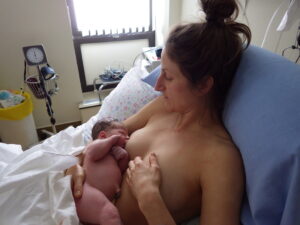
Giving birth can be beautiful, empowering and life-changing.
It can also be frightening, overwhelming and traumatic.
As a mother of three children, I know this from personal experience.
My first birth was nothing like what I had imagined. Although I had prepared carefully for childbirth, I wasn’t prepared for the fear, loss of control, medical interventions and difficult recovery that followed.
I’m sharing part of my story because I think we need to talk more openly about birth trauma.
Sometimes everyone is focused on the fact that the baby survived and is healthy while the person who gave birth is left carrying an experience that hasn’t been fully acknowledged.
What Is a Traumatic Birth?
Birth trauma isn’t defined only by what happened medically.
Two people can experience similar births and feel completely differently afterward.
For some people, trauma may be connected to an emergency C-section, complications, severe pain, medical intervention or fear that they or their baby might die.
For others, the trauma may come from feeling powerless, unheard, frightened, rushed, exposed or unable to understand what was happening.
What matters is how the experience affected you.
You don’t have to prove that your birth was “bad enough” to deserve support.
My Experience With Birth Trauma
When I was pregnant with my first child, I tried to prepare myself.
I read books, watched birth videos, attended appointments with my partner and worked with a midwife.
We planned a home birth with a birthing pool.
When my water broke at 8 p.m., we were excited. Labour had begun, and we believed our baby would soon be with us.
But the birth didn’t unfold the way we expected.
By the following morning I was in active labour. Eventually I became fully dilated and began pushing, but after several hours there was little progress.
After approximately 31 hours of labour, we were told we needed to go to the hospital.
Suddenly, our home birth became an emergency hospital birth.
When Everything Changed
At the hospital, forceps were attempted unsuccessfully.
I was exhausted and frightened.
We were then told that I needed an emergency C-section.
Receiving the spinal anesthesia was extremely difficult. There were numerous attempts before it was successfully administered, while I was already exhausted from more than 30 hours of labour.
I remember being wheeled toward the operating room, unable to feel or move my legs.
I was crying.
I was scared.
My partner held my hand.
And eventually, our baby boy was born.
There was enormous relief—but my experience wasn’t over.
The Physical Recovery Became Part of the Trauma
During the following days, I developed significant head and neck pain.
After going home, my symptoms became increasingly severe. I became extremely sensitive to light, couldn’t comfortably hold my head upright and eventually returned to the hospital.
I was diagnosed with a spinal fluid leak and received a blood patch.
At the same time, I was recovering from major abdominal surgery and trying to learn how to care for my first newborn.
Our baby was also experiencing difficulties after birth, which added another layer of worry and exhaustion.
Looking back, I can see how much I was carrying physically and emotionally.
“But You and the Baby Are Okay”
After a difficult birth, people understandably feel grateful when the parent and baby are physically safe.
But gratitude and trauma can exist at the same time.
You can love your baby deeply and feel traumatized by their birth.
You can be grateful for medical care and grieve the birth experience you hoped to have.
You can understand why an intervention was necessary and still feel frightened by what happened.
You don’t have to choose between those experiences.
What Birth Trauma Can Feel Like Afterwards
After a traumatic birth, some people may experience:
- Replaying parts of the birth repeatedly
- Feeling anxious when thinking about hospitals or medical procedures
- Nightmares or intrusive memories
- Anger about what happened
- Grief over the birth they had hoped for
- Feeling disconnected from their body
- Shame or believing they somehow “failed”
- Difficulty talking about the experience
- Feeling dismissed when others say, “At least the baby is healthy”
- Fear about becoming pregnant or giving birth again
Not everyone who experiences a difficult birth develops lasting trauma symptoms.
But if your experience continues to affect you, it deserves attention.
Why Telling Your Birth Story Can Matter
One thing I wish I’d had after my first birth was more emotional support to process what had happened.
There can be something powerful about having another person listen to the entire story without rushing to reassure you, minimize it or tell you what you should be grateful for.
Sometimes we need someone simply to understand:
That was frightening.
That wasn’t what you expected.
You felt powerless.
You were hurting.
It mattered.
Counselling can provide space to explore the emotions, memories, body sensations and beliefs connected to a traumatic experience at a pace that feels manageable.
My Later Birth Experiences Were Different
My subsequent births also taught me something important: one traumatic experience doesn’t necessarily determine what every future experience will be like.
With my second son, I had a vaginal birth after my previous C-section.
My third birth, at age 42, was a completely different experience again.
I felt supported, cared for and empowered. My partner was able to catch our baby, and the experience felt peaceful and beautiful.
Those later experiences didn’t erase what happened during my first birth.
But they became part of my story too.
Healing Doesn’t Mean Erasing What Happened
Processing trauma isn’t about convincing yourself that the experience wasn’t difficult.
It is about helping what happened become something you can remember without continually having to relive it.
For some people, healing may involve grief.
For others, anger.
You may need to understand what happened medically.
You may need to reconnect with your body.
You may need to talk about how the experience affected your relationship, sexuality, parenting or feelings about another pregnancy.
There isn’t one correct way to process birth trauma.
Counselling After a Traumatic Birth
My own experiences have influenced the importance I place on creating a counselling relationship where people feel heard rather than judged.
If you’ve experienced a traumatic birth, you don’t need to arrive knowing exactly what you want to work on.
We can begin with your story and what is happening for you now.
You can read more about person-centred counselling and my approach to empathy and acceptance.
If birth trauma, parenting, anxiety or another difficult life experience continues to affect you, you can also learn more about my counselling services in Nanaimo and online.
If you’d like to see whether counselling together feels like a good fit, you can request a free 15-minute consultation.
Pregnancy, Movement and My Other Work
My experience of pregnancy and motherhood also intersects with my work in health and fitness.
If you’re interested in that side of my work, I wrote about my personal experience with exercise during pregnancy and staying active on my Choose2Be website. If movement during pregnancy is part of what you’re exploring, you may also enjoy my Choose2be article on Exercising During Pregnancy: My Experience and What Current Guidelines Say.