
Intensive Couples Therapy in Nanaimo: More Time to Reconnect and Work Through Relationship Challenges

Intensive Couples Therapy in Nanaimo: More Time to Reconnect and Work Through Relationship Challenges

Veronique Rioux pregnant kissing the dad of her kids at Nanaimo riverIn the heart of Nanaimo, where the gentle lull of ocean waves meets the majestic embrace of mountains, couples seeking to deepen their connection are discovering a transformative approach to therapy—intensive couple therapy retreats. Instead of the traditional hour-a-week model, these retreats offer an immersive weekend experience, providing a unique and powerful space for couples to explore, heal, and strengthen their relationships. In this exploration, we delve into the profound impact of intensive couple therapy retreats and the potential they hold for fostering lasting connection and understanding.

The Intensive Couple Therapy Retreat Experience

Picture this: A secluded retreat nestled in the natural beauty of Vancouver Island, where couples are invited to step away from the demands of daily life and immerse themselves in a therapeutic journey. The intensive couple therapy retreat format typically involves dedicating an entire weekend to focused, uninterrupted therapeutic sessions.

Veronique Rioux pregnant leaning back on her partner smiling at Nanaimo riverBenefits of Intensive Couple Therapy Retreats:

  1. Deep Dive into Issues: With extended sessions, couples have the opportunity to delve deeper into their challenges, exploring the roots of conflicts and understanding each other on a profound level.
  2. Uninterrupted Focus: Traditional weekly sessions can sometimes feel rushed. The immersive nature of a retreat allows for uninterrupted focus, creating an environment conducive to breakthroughs and insights.
  3. Intensive Support: Couples receive concentrated support from therapists throughout the weekend, fostering a sense of safety and encouragement to address even the most sensitive topics.
  4. Accelerated Healing: The condensed time frame often accelerates the therapeutic process, allowing couples to make significant progress over a short period.
  5. Skill Building: Retreats often include skill-building exercises and activities, equipping couples with practical tools to enhance communication, intimacy, and conflict resolution.

Navigating the Retreat Experience in Nanaimo

In the enchanting surroundings of Nanaimo, Vancouver Island, couples can embark on a journey of relational renewal through intensive therapy retreats. The serene landscapes become a backdrop for transformative conversations, where the ebb and flow of the ocean mirror the rhythm of connection being rediscovered.

The Power of Nature in the Therapeutic Process:

Nanaimo’s natural beauty becomes an integral part of the retreat experience. From therapeutic walks along the shoreline to outdoor activities that encourage teamwork and communication, nature plays a role in grounding and enhancing the overall retreat experience.

Breaking Routine for Renewed Connection:

By stepping away from the routines and distractions of everyday life, couples attending retreats in Nanaimo can create a space for focused reflection and intentional connection. The retreat environment encourages a break from the familiar, allowing for new perspectives and insights to emerge.

Customized Approach for Lasting Impact:

Intensive couple therapy retreats in Nanaimo often offer a tailored approach, addressing the unique dynamics and challenges of each couple. The therapeutic process becomes a collaborative journey, guided by experienced therapists who facilitate meaningful conversations and provide tools for ongoing growth.

Overcoming Hesitations:

While the idea of committing to a weekend retreat may initially evoke hesitations, many couples find that the investment in time and energy yields significant rewards. It’s an opportunity to prioritize the relationship and embark on a concentrated period of growth and connection.

A Weekend to Rediscover, Reconnect, and Renew

Couples who choose to commit to a weekend of focused therapy find themselves navigating a journey of rediscovery, reconnection, and renewal.

Weekend Immersive Experience: Immerse yourselves in 15 hours of therapy spread over three days—an approach widely embraced for its effectiveness. This format includes a comprehensive written assessment prior to our in-person meeting.

Single-Day Intensive: Opt for a focused, daylong session spanning 4-6 hours—an option frequently chosen by local couples seeking concentrated therapeutic support.

Half-Day Refresher: For couples who have previously engaged in an intensive, consider a half or full-day refresher session. This is an excellent opportunity to revisit and strengthen your skills, especially when addressing new challenges that may have surfaced.

Intensive Couples Therapy at Your Doorstep: Catering to the needs of busy professional couples globally, I offer the option of conducting intensive therapy sessions in the comfort of your home community.

Tailored Relationship Therapy Package: I specialize in creating personalized intensive therapy packages designed to seamlessly align with your unique needs and circumstances.

Zoom Intensive Therapy—A New Frontier: For couples juggling demanding careers, parenting responsibilities, or geographical constraints, Zoom Intensive Therapy provides a flexible solution. This can be structured over 3 non-consecutive days across two or three weeks, allowing intervals for practice and progress. Alternatively, shorter intensives (half-day) are also available through video therapy, ensuring accessibility and effectiveness.

To read more check this post: “Imago Therapy: Strengthen Your Bond and Improve Communication“.

 
Understanding Depression: Signs, Coping Strategies, and When to Seek Support

Understanding Depression: Signs, Coping Strategies, and When to Seek Support

a person sitting down with their head in one hand so we can't see their face and other arm wrapping around themselvesDepression can affect how you feel, think, relate to others, and move through everyday life. It can make things that once felt simple or enjoyable feel exhausting, meaningless, or overwhelming.

Depression is also more than having a difficult day or feeling sad. Everyone experiences sadness, disappointment, and periods of low mood. Depression tends to be more persistent and can begin to interfere with relationships, work, sleep, motivation, and your ability to care for yourself.

Sometimes people know exactly what contributed to their depression. Other times, there isn’t one obvious reason.

Understanding what you’re experiencing can be an important first step toward getting the support you need.

What Are Common Signs of Depression?

Depression doesn’t look exactly the same for everyone. Some people feel intensely sad, while others describe feeling numb, disconnected, irritable, or simply unlike themselves.

Common signs can include:

  • Persistent sadness, emptiness, or hopelessness
  • Losing interest in activities you normally enjoy
  • Low energy or persistent fatigue
  • Difficulty getting motivated
  • Changes in sleep, including sleeping too much or too little
  • Changes in appetite
  • Difficulty concentrating or making decisions
  • Feeling worthless, guilty, or highly self-critical
  • Withdrawing from friends, family, or activities
  • Feeling emotionally numb or disconnected
  • Physical aches or discomfort
  • Thoughts about death or suicide

Experiencing some of these symptoms doesn’t necessarily mean that you have depression. A doctor or qualified mental-health professional can help you understand what you’re experiencing and whether additional assessment or treatment may be appropriate.

What Causes Depression?

There isn’t one single cause of depression.

Our emotional wellbeing can be influenced by a combination of our biology, relationships, environment, past experiences, current circumstances, physical health, and the ways we have learned to cope with difficult emotions.

Depression can sometimes emerge alongside:

  • Grief and loss
  • Trauma
  • Relationship difficulties
  • Loneliness or isolation
  • Chronic stress or burnout
  • Major life transitions
  • Financial or work stress
  • Physical illness
  • Difficult childhood experiences
  • Feeling disconnected from meaning or purpose

Sometimes depression can also appear when life looks relatively good from the outside.

You don’t have to justify why you’re struggling in order to deserve support.

What Can Help With Depression?

There is no single approach that works for everyone. Often, recovery involves a combination of emotional support, practical changes, professional care, and time.

Counselling and Emotional Support

Counselling can provide a confidential place to talk openly about what you’re experiencing.

Rather than having to pretend you’re okay or immediately find a solution, therapy gives you space to understand your emotions, relationships, experiences, and patterns.

My counselling approach is person-centred and integrative. We can explore what is happening in your life while also drawing on different therapeutic approaches and practical tools when they are helpful.

You can learn more about my counselling approach and services in Nanaimo and online.

Start Small

When you’re depressed, even ordinary responsibilities can feel enormous.

Rather than expecting yourself to suddenly become productive or motivated, it can help to make the next step very small.

Getting out of bed. Taking a shower. Eating something nourishing. Stepping outside for five minutes. Calling someone you trust.

Small actions still count.

Movement and Time Outdoors

Physical activity can support mental health, but it doesn’t need to mean an intense workout.

Walking, stretching, gardening, dancing, swimming, or simply spending some time outside can help reconnect you with your body and environment.

The goal isn’t to exercise your way out of depression. Movement is simply one tool that can support your overall wellbeing.

Connection

Depression often encourages isolation.

You may not feel like talking or being around other people, but prolonged isolation can sometimes deepen feelings of loneliness and disconnection.

Connection doesn’t have to mean attending a large social event. It might simply mean having coffee with someone you trust, calling a friend, sitting with a family member, joining a supportive group, or speaking with a counsellor.

Mindfulness

Mindfulness can help you notice difficult thoughts and emotions without immediately becoming consumed by them.

It isn’t about forcing yourself to think positively or pretending painful feelings aren’t there. Instead, mindfulness encourages you to notice what is happening with curiosity and compassion.

You can read more about mindfulness and emotional wellbeing.

Sleep, Food, and Daily Routines

Depression can disrupt the basic routines that help us feel grounded.

Regular sleep, nourishing food, movement, time outside, and predictable routines won’t necessarily resolve depression on their own, but they can provide a stronger foundation while you’re recovering.

When everything feels overwhelming, focus on the basics first.

Depression and Self-Criticism

One of the painful parts of depression can be the way we begin talking to ourselves.

You might think:

“I should be doing better.”

“Other people have it worse.”

“Why can’t I just get myself together?”

“What’s wrong with me?”

These thoughts can create another layer of suffering on top of what you’re already experiencing.

Counselling can help you become curious about these internal messages and where they came from, while developing a more compassionate relationship with yourself.

You don’t have to criticize yourself into becoming well.

When Depression Feels Overwhelming

Sometimes depression can include thoughts about death, self-harm, or suicide.

These thoughts should be taken seriously.

If you are experiencing suicidal thoughts, especially if you are thinking about acting on them or don’t feel that you can keep yourself safe, seek immediate crisis or emergency support rather than waiting for a regular counselling appointment.

I have also created a more detailed resource about suicidal thoughts, warning signs, safety planning, and finding immediate support.

You Don’t Have to Wait Until Things Get Worse

You don’t need to reach a breaking point before seeking counselling.

Sometimes people wait because they believe their struggles aren’t serious enough, or because they think they should be able to solve everything themselves.

Counselling can simply be a place to understand what’s happening, feel heard, and begin finding your way forward.

Healing doesn’t necessarily happen in one dramatic moment. Often, it happens through many small changes, insights, conversations, and experiences over time.

Counselling for Depression in Nanaimo and Online

If you’re experiencing depression, persistent low mood, emotional exhaustion, or simply don’t feel like yourself anymore, counselling can provide a supportive place to begin exploring what’s happening.

I offer in-person counselling in Nanaimo and online counselling, allowing you to choose the format that works best for you.

If you’d like to see whether working together feels like the right fit, you can book a free consultation here.

You don’t have to know exactly what you need before reaching out. Sometimes the first step is simply having a conversation.


Counselling vs. Coaching: Which Kind of Support Is Right for You?

Counselling vs. Coaching: Which Kind of Support Is Right for You?

The journey towards personal growth and well-being often involves seeking support. Two common avenues for this support are coaching and counselling, each offering unique approaches to guide individuals on their path. In this article, we delve into the differences between coaching and counselling, exploring their distinct roles and how they contribute to the holistic development of individuals. Whether you’re considering counselling in Nanaimo or exploring coaching options, understanding these distinctions is key to making informed decisions about your personal growth journey.

Defining Counselling versus coaching: Unveiling the Therapeutic Journey

Counselling Overview: Counselling is a therapeutic process aimed at addressing emotional, psychological, and relational challenges. It provides a safe and confidential space for individuals to explore their thoughts, feelings, and behaviours with a trained professional—the counsellor. The counselling relationship is built on trust, empathy, and understanding, fostering an environment where clients can gain insights into their challenges, develop coping strategies, and work towards personal growth.

Exploring Coaching versus counselling: Empowering Forward Momentum

Coaching Overview: Coaching is a collaborative and action-oriented process focused on empowering individuals to achieve their goals. A coach works with clients to identify their aspirations, set actionable objectives, and develop strategies to overcome obstacles. Coaching is future-oriented, emphasizing personal and professional development to unlock an individual’s full potential.

Goals of Counselling:

  • Healing from Past Trauma: Counselling often involves addressing past traumas or unresolved issues that impact an individual’s well-being.
  • Enhancing Self-Awareness: Clients explore their emotions, thoughts, and behaviours to gain a deeper understanding of themselves.
  • Developing Coping Skills: Counsellors assist clients in developing effective coping mechanisms to navigate life’s challenges.
  • Improving Relationships: Counselling can focus on improving interpersonal skills and fostering healthier relationships.

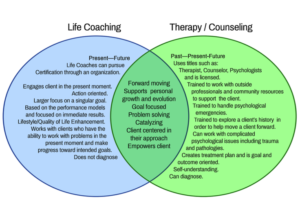
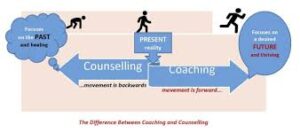
picture of counselling versus coaching with arrow and wordsGoals of Coaching:

  • Setting and Achieving Goals: Coaches help clients articulate and achieve specific, measurable, and attainable goals.
  • Enhancing Performance: Coaching aims to optimise an individual’s performance, whether in personal relationships or professional endeavours.
  • Building Confidence: Coaches support clients in building self-confidence and resilience to navigate challenges.
  • Facilitating Change: Coaching encourages individuals to explore new perspectives and take purposeful actions to create positive change.

Key Distinctions: Counselling vs. Coaching

  1. Focus and Time Frame:
    • Counselling: Primarily focuses on healing, self-exploration, and addressing emotional challenges. It often involves a more open-ended time frame, allowing for deeper exploration.
    • Coaching: Centres around goal-setting, action plans, and achievement. Coaching engagements are often more structured and goal-specific, with a focus on short to medium-term objectives.
  2. Emotional Exploration:
    • Counselling: Encourages a deep dive into emotions, past experiences, and the roots of current challenges. It involves therapeutic interventions to address emotional wounds.
    • Coaching: While emotions are acknowledged, coaching primarily focuses on moving forward. Coaches may help clients manage emotions but do not delve as deeply into psychological exploration as counsellors.
  3. Client Autonomy:
    • Counselling: Emphasises a more directive approach from the counsellor, who may provide insights, interpretations, and therapeutic interventions.
    • Coaching: Promotes a collaborative partnership where the coach acts more as a facilitator, guiding clients to discover their own solutions and strategies.

life coaching versus counselling vern diagram Choosing the Right Path: A Personal Decision


Deciding between counselling and coaching in Nanaimo is a personal choice influenced by the nature of your challenges, your goals, and your preferred approach to personal growth. Both counselling and coaching play valuable roles in supporting individuals, and it’s not uncommon for individuals to benefit from a combination of both at different stages of their journey.

In the picturesque landscapes of Nanaimo, Vancouver Island, the paths of counselling and coaching intertwine, offering individuals diverse avenues for growth and self-discovery. Whether you seek the introspective healing of counselling or the forward momentum of coaching, the important thing is to choose a path that aligns with your unique needs and aspirations. In the heart of this natural beauty, the choice is yours to make as you embark on a transformative journey towards holistic well-being and personal growth.

Make sure you check my coaching program: Transform your Health in Eight weeks

If you want to read more look at this post: “Attachment theory and how it can help you understand yourself better and heal your relationships“.

Building the Life You Want: Pleasure, Purpose and What Makes Life Meaningful

Building the Life You Want: Pleasure, Purpose and What Makes Life Meaningful

Veronique Rioux with her two boys in a pool while raining with her arms extended above her head and laughingIn the picturesque landscapes of Nanaimo, Vancouver Island, where the natural beauty of ocean and mountains converges, the pursuit of a fulfilling life takes on a unique significance. It’s a journey that often prompts introspection, self-discovery, and a search for the elusive meaning of life. In this post, we dive into the book “Building the Life You Want” to explore the concepts of pleasure versus satisfaction, the quest for coherence, purpose, and significance, and the power of metacognition in managing emotions. Whether you seek guidance through in-person counselling in Nanaimo or online sessions, this exploration is here to help you build a life that resonates with your deepest desires.

Pleasure vs. Satisfaction: Unpacking the Difference to build the life you want

Veronique Rioux sitting in a colourful dress laughingIn the quest for a fulfilling life, it’s essential to distinguish between pleasure and satisfaction. Pleasure is often linked to immediate, sensory experiences. It’s the joy of savoring a delicious meal, the thrill of a spontaneous adventure, or the comfort of a warm embrace. Pleasure is important, but it can be fleeting and external. On the other hand, satisfaction is rooted in a deeper sense of fulfillment. It’s the contentment that comes from achieving meaningful goals, cultivating strong relationships, and living in alignment with your values. Satisfaction is enduring and internal, providing a profound sense of well-being.

The Solitary Nature of Pleasure:

Pleasure tends to be immediate, sensory, and often individualistic. It’s those moments when you indulge in something that brings you instant gratification, such as savoring a decadent dessert or binge-watching a TV series. Pleasure is about personal enjoyment and often occurs in isolation because it’s driven by personal preferences and desires. While these experiences can be enjoyable, they may not necessarily contribute to a lasting sense of well-being or fulfillment.

The Social Aspect of Satisfaction:

In contrast, satisfaction often involves shared experiences and a sense of connection with others. It goes beyond individual pleasure and encompasses the fulfillment that comes from meaningful interactions and contributions to the greater good. Satisfaction arises from building and nurturing relationships, achieving personal goals that have a positive impact on others, and living in alignment with one’s values.

The Risk of Pleasure-Seeking Behaviors:

Engaging in solitary pleasure-seeking behaviors, especially when done excessively, can pose risks. It’s not uncommon for individuals to turn to these activities to cope with stress, anxiety, or loneliness. Over time, such behaviors can become habitual and may even lead to addiction. For example, excessive use of substances, video games, or social media in isolation can provide short-term pleasure but can be detrimental to overall well-being when pursued in excess.

The Importance of Balance:

The key is to strike a balance between pleasure and satisfaction. Pleasure can certainly enhance our lives and provide moments of joy, but it should be complemented by activities and experiences that foster satisfaction, connection, and meaning. Engaging in shared experiences, helping others, and nurturing relationships can lead to a more profound and lasting sense of fulfillment.

Seeking Shared Satisfaction:

To cultivate satisfaction, consider activities that you can enjoy with others. This might involve volunteering for a cause you’re passionate about, joining group fitness classes, participating in community events, or simply spending quality time with loved ones. These shared experiences not only enhance your sense of fulfillment but also strengthen your social bonds, reducing the risk of isolation and addictive behaviors.

Finding Meaning in Life: Coherence, Purpose, and Significance

The pursuit of a meaningful life often involves three core elements:

  1. Coherence: Coherence refers to the sense that your life makes sense, that there is a narrative thread weaving through your experiences. It’s about understanding your past, present, and future in a way that resonates with your core values and beliefs. Why do thing happen the way they do?
  2. Purpose: Purpose is the driving force that motivates you to get out of bed each morning. It’s the sense of direction and meaning in your life’s journey. Finding purpose often involves identifying your passions and aligning them with actions that contribute to the greater good. What am I trying to do with my life?
  3. Significance: Significance involves recognizing the impact of your actions on others and the world. It’s about leaving a positive mark, however small, on the lives of those around you. Why does it matter that I am alive?
Metacognition: Managing Emotions and Choosing Your Responses

Metacognition is the ability to think about your thinking. It’s a powerful tool in managing emotions and making conscious choices about how you respond to them. Instead of being controlled by your emotions, metacognition allows you to:

  • Recognize Emotions: Identify and acknowledge your emotions without judgment.
  • Choose Your Emotions: Recognize that you have the power to choose your emotional responses to situations. This doesn’t mean denying emotions but rather deciding how you want to feel in response to them.
  • Substitute or Disregard Emotions: Sometimes, it’s beneficial to substitute or disregard certain emotions when they are not serving your well-being or goals. This can help you maintain focus and inner peace.
  • Focus on Others: One of the most effective ways to manage emotions is to shift your attention from yourself to others. By being selfless and paying attention to the world around you, you can find fulfillment and joy.

The journey towards a more fulfilling life is an ever-evolving exploration. Whether through the wisdom found in the book “Building the Life You Want” or through counselling, the concepts of pleasure versus satisfaction, the quest for coherence, purpose, and significance, and the power of metacognition can serve as guiding stars.

Remember, life’s beauty lies not only in the pleasure of the moment but also in the satisfaction of a life lived with coherence, purpose, and significance. Through metacognition, you can navigate the emotional landscape, choosing your responses and finding joy in selflessness. Building the life you want is not a destination but a profound journey of self-discovery and growth.

You can keep reading more here: “Navigating the Darkness: Lessons from Embracing Uncertainty“.

Body Image Dissatisfaction: Building a Kinder Relationship With Your Body

Body Image Dissatisfaction: Building a Kinder Relationship With Your Body

4 women in bathing suit laughing and being happyOur relationship with our body can be complicated.

You can appreciate what your body allows you to do and still wish parts of it looked different.

You can feel confident one day and critical of yourself the next.

You can know intellectually that bodies change with age, pregnancy, hormones, illness or simply life—and still struggle emotionally when those changes happen to your body.

Body image isn’t only about how your body looks.

It’s also about how you think about, feel about and experience yourself within your body.

What Is Body Image Dissatisfaction?

Body image dissatisfaction happens when there is a painful gap between how you perceive your body and how you believe your body should look.

It might show up as:

  • Frequently criticizing your appearance
  • Comparing your body with other people’s
  • Avoiding photographs
  • Checking mirrors repeatedly—or avoiding them altogether
  • Feeling uncomfortable being seen
  • Focusing intensely on particular parts of your body
  • Believing you’d be happier or more confident if your body changed
  • Difficulty accepting aging or changes in your appearance
  • Feeling that your worth is connected to your weight, shape or attractiveness
  • Avoiding intimacy because you feel self-conscious
  • Exercising primarily to punish or change your body

Sometimes these thoughts take up a surprising amount of mental space.

Where Does Body Dissatisfaction Come From?

There usually isn’t one cause.

Our relationship with our body develops over many years and can be influenced by family, culture, relationships, social media and our own experiences.

Beauty Standards and Social Media

We’re surrounded by messages about what bodies are supposed to look like.

Thin enough.

Young enough.

Muscular enough.

Smooth enough.

Curvy—but in exactly the “right” places.

Social media adds another layer because we’re constantly exposed to carefully selected photographs, flattering angles, filters and edited images.

Even when we know intellectually that an image isn’t completely realistic, we can still compare ourselves to it emotionally.

Messages We Learned Growing Up

Body image can also begin much earlier.

Perhaps people commented on your weight.

Maybe you watched a parent constantly diet or criticize their own body.

Perhaps you developed earlier or later than your peers.

Maybe you received a lot of attention for being attractive and gradually learned that appearance was an important part of your value.

Or perhaps you were teased or criticized for how you looked.

Those experiences can stay with us.

When Appearance Becomes Connected to Self-Worth

Wanting to look attractive isn’t inherently unhealthy.

Most of us care, at least somewhat, about how we look.

The difficulty comes when appearance begins determining how worthy we feel.

If I look good, I’m confident.

If I’ve gained weight, I’m failing.

If someone finds me attractive, I’m valuable.

If I’m aging, I’m losing something important.

When our self-worth becomes heavily dependent on appearance, it can feel fragile because bodies inevitably change.

Part of body-image work can involve asking:

Who am I beyond what I look like?

Your Body Is More Than Something to Look At

One way of shifting our relationship with the body is to notice what it does, rather than only evaluating how it looks.

Your body lets you:

Walk.

Dance.

Hug someone.

Carry a child.

Swim.

Laugh.

Have sex.

Work.

Rest.

Feel the sun.

Recover.

Experience pleasure.

Move through the world.

You don’t have to love every part of your body every day to begin treating it with respect.

Sometimes body neutrality—“This is my body, and I don’t need to judge it constantly”—is a much more realistic place to begin than forcing yourself to believe everything about your body is beautiful.

Body Image and Aging

Aging can bring another layer to body image.

Our skin changes.

Our shape changes.

Hair changes.

Strength and recovery can change.

For women especially, there can be enormous cultural pressure to somehow age without appearing to age.

It can create a strange conflict between being grateful to grow older and grieving aspects of a younger body.

Both experiences can exist together.

Acceptance doesn’t require pretending that every change feels easy.

It means allowing yourself to experience those feelings without making your changing appearance evidence that you’ve become less valuable.

Movement: Care or Punishment?

Exercise can have a complicated relationship with body image.

Movement can help us feel strong, capable, energetic and connected to our bodies.

But it can also become punishment.

I ate too much, so I need to exercise.

I have to burn this off.

I can’t miss a workout or I’ll gain weight.

One useful question is:

“Am I moving my body because I care for it, or because I’m trying to punish it?”

The exact same workout can come from two very different relationships with ourselves.

Movement can become an opportunity to appreciate what your body is capable of rather than constantly trying to make it smaller or different.

Notice How You Speak to Yourself

Many people say things to themselves about their bodies that they would never say to another person.

I look disgusting.

My stomach is horrible.

I’ve let myself go.

Nobody will find me attractive.

The goal isn’t to replace every critical thought with a positive affirmation you don’t believe.

Start with curiosity.

Would I speak this way to someone I love?

Where did I learn that this part of my body was unacceptable?

What happens emotionally when I talk to myself this way?

Self-compassion doesn’t mean giving up.

It means recognizing that cruelty isn’t necessary for growth.

Comparison Can Steal Your Relationship With Your Own Body

Comparison is almost automatic.

But we rarely compare fairly.

We compare our ordinary body with someone’s best photograph.

Our current body with our younger body.

Our beginning with someone else’s years of work.

Our perceived weaknesses with someone else’s strengths.

When you notice yourself comparing, you don’t need to shame yourself for doing it.

Simply notice:

I’m comparing again.

Then bring your attention back to your own experience.

Mindfulness and Body Image

Mindfulness can help us become aware of body-related thoughts without immediately accepting them as truth.

You might notice:

“I’m having the thought that my body isn’t good enough.”

That’s subtly different from:

“My body isn’t good enough.”

One is a thought you’re observing.

The other becomes a fact about who you are.

That little bit of distance can matter.

You can read more about mindfulness and learning to observe thoughts without judgment.

Body Image and Intimacy

Body dissatisfaction can also affect relationships and sexuality.

You may avoid being naked.

Want the lights off.

Have difficulty receiving touch.

Become preoccupied with how your body looks during sex instead of experiencing what’s happening.

Or believe your partner is judging parts of your body that you’re judging yourself.

Feeling safer and more accepting within your body can make it easier to experience intimacy from the inside rather than watching and evaluating yourself from the outside.

When Body Image Is Affecting Your Life

Body-image concerns exist on a spectrum.

For some people, they’re occasional insecurities.

For others, thoughts about food, weight, exercise or appearance begin controlling significant parts of daily life.

If you’re restricting food, bingeing, purging, compulsively exercising or experiencing significant distress around eating or your body, additional specialized support may be appropriate.

You don’t need to wait until things become severe before talking to someone.

How Counselling Can Help With Body Image

Counselling isn’t about convincing you that you must love everything about your appearance.

Instead, we can become curious about the relationship you’ve developed with your body.

Where did your beliefs come from?

Whose standards are you trying to meet?

What does being attractive represent to you?

How much of your self-worth has become connected to appearance?

What would change if your body didn’t have to be a constant project?

Person-centred counselling creates space to explore these questions without judgment. You can read more about my person-centred approach to counselling.

Body Image Counselling in Nanaimo and Online

Developing a healthier relationship with your body doesn’t necessarily mean waking up every morning loving everything you see in the mirror.

It may mean something quieter.

Less comparison.

Less criticism.

More respect.

More freedom.

More connection to what your body feels like rather than only what it looks like.

And a growing understanding that your worth has never depended on fitting someone else’s definition of an acceptable body.

You can learn more about my counselling services in Nanaimo and online.

If you’d like to see whether working together feels like a good fit, you can request a free 15-minute consultation.