

Preventing Burnout in Helping Professionals: Self-Care, Boundaries and Support

Preventing Burnout in Helping Professionals: Self-Care, Boundaries and Support

person sitting on the floor with her arms cross around her knee and head down hiding on her armsWorking in a profession that involves caring for other people can be incredibly meaningful. It can also be emotionally demanding.

Counsellors, nurses, healthcare workers, education professionals, social workers, caregivers and others in helping roles spend much of their working lives responding to other people’s needs.

When you’re accustomed to being the person who helps, it can become surprisingly easy to overlook your own exhaustion.

Burnout isn’t simply a sign that you need a vacation or aren’t practising enough self-care. It can develop when the demands placed on us repeatedly exceed the resources, recovery and support available to us.

What Is Burnout?

The World Health Organization describes burnout as an occupational phenomenon resulting from chronic workplace stress that has not been successfully managed.

It can involve three broad experiences:

  • Feeling depleted or exhausted
  • Becoming increasingly mentally distant, negative or cynical about work
  • Feeling less effective professionally

Burnout isn’t classified by the WHO as a medical condition. It specifically refers to the occupational context.

That distinction matters because feeling exhausted doesn’t necessarily mean there’s something wrong with you. Sometimes we need to look at what’s happening around us as well.

Why Helping Professionals Can Be Vulnerable to Burnout

Helping work asks us to remain present with other people’s needs, emotions and difficulties.

Over time, this can become particularly demanding when combined with things such as:

  • Heavy workloads
  • Insufficient recovery time
  • Staffing shortages
  • Difficult workplace dynamics
  • Repeated exposure to other people’s distress
  • Feeling responsible for outcomes we can’t completely control
  • Difficulty saying no
  • Blurred boundaries between work and personal life
  • Caring responsibilities at home as well as at work

People who genuinely care about their work may sometimes be especially vulnerable to continually giving more.

Recognizing the Signs of Burnout

Burnout doesn’t always arrive dramatically.

It may develop gradually.

You might notice that you’re:

  • Exhausted even after resting
  • Dreading work that once felt meaningful
  • Becoming more irritable or impatient
  • Feeling emotionally numb or detached
  • Having difficulty concentrating
  • Struggling to leave work mentally when the workday ends
  • Feeling increasingly cynical
  • Questioning whether your work makes any difference
  • Withdrawing from colleagues, friends or family
  • Having less energy for activities you normally enjoy

Sometimes the first indication isn’t “I’m burned out.”

It’s simply:

“I can’t keep doing this at this pace.”

That sentence deserves attention.

Self-Care Matters—but It Isn’t the Whole Solution

Sleep, movement, nourishing food, time outside, meaningful relationships and activities that bring pleasure can all support resilience.

But burnout shouldn’t automatically become another personal responsibility:

Exercise more. Meditate more. Sleep better. Manage your stress better.

Sometimes the problem isn’t that you’re failing at self-care.

Sometimes too much is being asked of you.

Meaningful burnout prevention therefore includes both caring for yourself and examining the conditions contributing to your exhaustion.

You can read more about everyday strategies in my article on self-care for mental health and stress.

Boundaries Are Part of Self-Care

Helping professionals often become very skilled at noticing what other people need.

A harder question can be:

What do I need?

Healthy boundaries might mean:

  • Not automatically accepting another shift or responsibility
  • Taking your scheduled breaks
  • Protecting time away from work
  • Not answering non-urgent work messages during personal time
  • Asking colleagues for help
  • Recognizing what is and isn’t your responsibility
  • Saying no when your capacity is already stretched

Boundaries aren’t evidence that you care less.

Sometimes they are what allow you to continue caring without continually sacrificing yourself.

You Need Somewhere to Put What You Carry

Helping professionals hear and witness a lot.

Having somewhere appropriate to process that experience matters.

Depending on your profession, support might come through trusted colleagues, clinical supervision, consultation, friends, family or your own counselling.

Professional confidentiality still matters, of course. The goal isn’t to disclose private information about the people you support.

It’s having somewhere you can talk about your own emotional experience of doing difficult work.

Reconnect With Meaning

Burnout can gradually disconnect us from why we chose our work in the first place.

You may find it helpful to ask:

What originally mattered to me about this work?

Which parts still feel meaningful?

Which parts are draining me most?

What would need to change for this work to feel sustainable again?

Sometimes small changes are enough.

Sometimes those questions reveal that something more significant needs to change.

When Rest Doesn’t Feel Like Enough

A weekend away or a few days off may help temporarily.

But if you return and immediately feel overwhelmed again, it may be worth looking more deeply at what is happening.

Is the workload sustainable?

Are you carrying responsibilities that aren’t actually yours?

Have your boundaries gradually disappeared?

Are workplace conditions contributing?

Is something happening outside of work that’s reducing your capacity?

Have you become disconnected from yourself while spending so much time caring for everyone else?

Counselling can provide a place to explore those questions without needing to take care of someone else at the same time.

Counselling for Burnout in Nanaimo and Online

You don’t have to wait until you’re completely depleted before asking for support.

Sometimes counselling can help you recognize burnout earlier, understand the patterns that contribute to overextending yourself, strengthen boundaries and explore what needs to change.

My person-centred approach is particularly important here. I don’t believe my role is to tell you simply to “cope better” with circumstances that may genuinely be unsustainable.

Instead, we can become curious together about what you’re experiencing and what you need.

You can read more about person-centred counselling and my approach to empathy and acceptance.

If you’re experiencing burnout, chronic stress or emotional exhaustion, you can learn more about my counselling services in Nanaimo and online.

If you’d like to see whether working together feels like a good fit, you can request a free 15-minute consultation.


Imago Therapy for Couples: From Conflict to Connection

Imago Therapy for Couples: From Conflict to Connection

Imago therapy, couples therapy, communication, conflict resolution, relationship therapyAll relationships have their ups and downs, but sometimes couples experience significant challenges that seem insurmountable. Miscommunication, disagreements, and other issues can cause couples to feel disconnected, frustrated, and unhappy. Imago Therapy is a specialized form of couples therapy that can help couples build stronger, healthier relationships and feel better about their partnership.

Understanding Imago couple Therapy

Imago Therapy is based on the idea that every individual brings their own unique set of experiences and perspectives to their relationships. Imago Therapy seeks to help couples understand and empathize with their partner’s experiences and perspectives, allowing them to build a deeper connection and resolve conflicts more effectively. Imago Therapy helps couples to communicate more effectively and connect with one another on a deeper level.

How Imago Therapy Works

Imago Therapy uses a structured approach to help couples identify and address underlying issues in their relationship. Couples will work with a trained Imago therapist to explore their relationship patterns, uncover past traumas, and develop new communication and conflict resolution skills. By addressing underlying issues and improving communication, couples can create a more loving and supportive partnership.

The Benefits of Imago Therapy

Imago Therapy can provide many benefits for couples, including:

  • Improved communication: Couples can learn to communicate more effectively and understand one another’s perspectives.
  • Increased empathy: Imago Therapy helps couples to empathize with one another’s experiences and build a deeper connection.
  • Better conflict resolution: Couples can learn new skills for resolving conflicts and working through disagreements in a productive and respectful manner.
  • Stronger partnership: By improving communication and resolving underlying issues, couples can build a stronger and healthier relationship.
Who Can Benefit from Imago Therapy

Imago Therapy can benefit any couple who is struggling with communication, conflict resolution, or other relationship issues. Whether couples are dealing with a specific issue or just feel disconnected from one another, Imago Therapy can provide the tools and support they need to build a stronger and healthier relationship. Imago Therapy can be especially effective for couples who are considering separation or divorce, as it can help them to work through their issues and develop a deeper connection.

Transform Your Relationship with Imago Therapy

If you are struggling in your relationship and are looking for a way to feel better, consider Imago Therapy. With its structured approach and emphasis on communication and empathy, Imago Therapy can help you and your partner build a stronger and healthier relationship. By addressing underlying issues and developing new skills, you can create a more loving and supportive partnership that will stand the test of time.

An other couple therapy style is Gottman therapy for couple and the basic counselling method.

Gottman-Informed Couples Counselling: Building Stronger Relationships

Gottman-Informed Couples Counselling: Building Stronger Relationships

Gottman therapy, Gottman method, Couples therapy, Relationship therapy, Marriage counseling, Communication skills, Conflict resolution, Emotional intelligence, Vancouver Island counseling, Nanaimo counseling, Relationship advice, Love and relationships, Healthy relationships, Couples counseling techniques, Gottman assessment

If you are looking for couples therapy in Nanaimo or on Vancouver Island, the Gottman method may be a good option for you. In this post, we will explore the basics of Gottman therapy and how it can help you and your partner.

What is the Gottman Method?

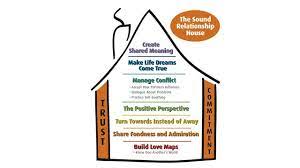
The Gottman method is a structured and goal-oriented approach to couples therapy. It is based on the idea that successful relationships are built on a foundation of love, trust, and mutual respect, and that the key to a successful relationship is the ability to communicate effectively and resolve conflicts in a healthy way.

In Gottman therapy, the therapist works with the couple to identify their strengths and weaknesses and to help them develop skills and strategies to improve their relationship. The therapy is based on a number of principles and techniques, including:

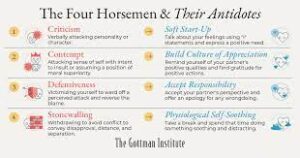
  1. Gottman therapy, Gottman method, Couples therapy, Relationship therapy, Marriage counseling, Communication skills, Conflict resolution, Emotional intelligence, Vancouver Island counseling, Nanaimo counseling, Relationship advice, Love and relationships, Healthy relationships, Couples counseling techniques, Gottman assessmentThe Four Horsemen of the Apocalypse The Four Horsemen of the Apocalypse are criticism, contempt, defensiveness, and stonewalling. These four behaviors are toxic to relationships and can lead to the breakdown of communication and intimacy. In Gottman therapy, the therapist helps the couple to identify and avoid these behaviors and replace them with positive communication strategies.
  2. The Magic Ratio The Magic Ratio refers to the ratio of positive interactions to negative interactions in a relationship. According to Gottman’s research, a ratio of 5:1 (five positive interactions for every negative interaction) is the minimum required for a relationship to be healthy and sustainable. In therapy, the therapist helps the couple to increase their positive interactions and decrease their negative interactions.
  3. Love Maps Love Maps are the mental representations we have of our partner’s world. In Gottman therapy, the therapist helps the couple to build and strengthen their Love Maps by encouraging them to learn more about each other’s interests, goals, and values.
  4. The Emotional Bank Account The Emotional Bank Account is the metaphorical account we all have in our relationships. Every time we do something positive for our partner, we make a deposit in the Emotional Bank Account, and every time we do something negative, we make a withdrawal. In Gottman therapy, the therapist helps the couple to make more deposits and fewer withdrawals.
  5. Dreams Within Conflict In every conflict, there are underlying dreams and aspirations that are driving the disagreement. In Gottman therapy, the therapist helps the couple to identify these dreams and aspirations and work towards finding solutions that satisfy both partners.

How Does Gottman Therapy Work?

Gottman therapy typically involves a series of structured sessions with a trained therapist. The therapy may be conducted individually, as a couple, or in a group setting. The therapist will work with the couple to identify their goals for therapy and develop a plan to achieve those goals.

Level 1 clinical training logoDuring therapy sessions, the therapist will use a range of techniques to help the couple communicate effectively, resolve conflicts, and build a stronger, more loving relationship. These techniques may include role-playing, exercises to increase emotional awareness and empathy, and homework assignments to practice new skills outside of therapy sessions.

One of the key features of Gottman therapy is the use of assessments and questionnaires to gather data on the couple’s relationship. These assessments may be used at the beginning of therapy to establish a baseline and identify areas of strength and weakness, and throughout therapy to track progress and adjust the treatment plan as needed.

Is Gottman Therapy Effective?

This research-based approach to couples counselling that has proven highly effective for many. Rooted in over four decades of scientific research, it focuses on building love maps (understanding each other’s inner worlds), managing conflict constructively, enhancing positivity, and creating shared meaning in relationships. The approach emphasizes the importance of friendship as the foundation of a healthy partnership, teaching couples practical tools like soft start-ups, repair attempts, and emotional self-soothing to navigate conflicts. Studies support its effectiveness, showing that couples who apply these strategies can reduce resentment, improve communication, and strengthen emotional intimacy. It is particularly beneficial for those facing chronic conflict, communication issues, or a need to rebuild trust, though it may be less effective in cases of active abuse or severe, untreated mental health challenges. Clients frequently report improved connection, deeper intimacy, and greater confidence in handling disagreements, making Gottman therapy a reliable choice for couples committed to enhancing their relationship. Its success, however, depends on the active participation and effort of both partners.

To read more about “Navigating the Grief and Loss Journey” post.

Birth Trauma: When Giving Birth Becomes a Traumatic Experience

Birth Trauma: When Giving Birth Becomes a Traumatic Experience

Giving birth can be beautiful, empowering and life-changing.

It can also be frightening, overwhelming and traumatic.

As a mother of three children, I know this from personal experience.

My first birth was nothing like what I had imagined. Although I had prepared carefully for childbirth, I wasn’t prepared for the fear, loss of control, medical interventions and difficult recovery that followed.

I’m sharing part of my story because I think we need to talk more openly about birth trauma.

Sometimes everyone is focused on the fact that the baby survived and is healthy while the person who gave birth is left carrying an experience that hasn’t been fully acknowledged.

What Is a Traumatic Birth?

Birth trauma isn’t defined only by what happened medically.

Two people can experience similar births and feel completely differently afterward.

For some people, trauma may be connected to an emergency C-section, complications, severe pain, medical intervention or fear that they or their baby might die.

For others, the trauma may come from feeling powerless, unheard, frightened, rushed, exposed or unable to understand what was happening.

What matters is how the experience affected you.

You don’t have to prove that your birth was “bad enough” to deserve support.

My Experience With Birth Trauma

When I was pregnant with my first child, I tried to prepare myself.

I read books, watched birth videos, attended appointments with my partner and worked with a midwife.

We planned a home birth with a birthing pool.

When my water broke at 8 p.m., we were excited. Labour had begun, and we believed our baby would soon be with us.

But the birth didn’t unfold the way we expected.

By the following morning I was in active labour. Eventually I became fully dilated and began pushing, but after several hours there was little progress.

After approximately 31 hours of labour, we were told we needed to go to the hospital.

Suddenly, our home birth became an emergency hospital birth.

When Everything Changed

At the hospital, forceps were attempted unsuccessfully.

I was exhausted and frightened.

We were then told that I needed an emergency C-section.

Receiving the spinal anesthesia was extremely difficult. There were numerous attempts before it was successfully administered, while I was already exhausted from more than 30 hours of labour.

I remember being wheeled toward the operating room, unable to feel or move my legs.

I was crying.

I was scared.

My partner held my hand.

And eventually, our baby boy was born.

There was enormous relief—but my experience wasn’t over.

The Physical Recovery Became Part of the Trauma

During the following days, I developed significant head and neck pain.

After going home, my symptoms became increasingly severe. I became extremely sensitive to light, couldn’t comfortably hold my head upright and eventually returned to the hospital.

I was diagnosed with a spinal fluid leak and received a blood patch.

At the same time, I was recovering from major abdominal surgery and trying to learn how to care for my first newborn.

Our baby was also experiencing difficulties after birth, which added another layer of worry and exhaustion.

Looking back, I can see how much I was carrying physically and emotionally.

“But You and the Baby Are Okay”

After a difficult birth, people understandably feel grateful when the parent and baby are physically safe.

But gratitude and trauma can exist at the same time.

You can love your baby deeply and feel traumatized by their birth.

You can be grateful for medical care and grieve the birth experience you hoped to have.

You can understand why an intervention was necessary and still feel frightened by what happened.

You don’t have to choose between those experiences.

What Birth Trauma Can Feel Like Afterwards

After a traumatic birth, some people may experience:

  • Replaying parts of the birth repeatedly
  • Feeling anxious when thinking about hospitals or medical procedures
  • Nightmares or intrusive memories
  • Anger about what happened
  • Grief over the birth they had hoped for
  • Feeling disconnected from their body
  • Shame or believing they somehow “failed”
  • Difficulty talking about the experience
  • Feeling dismissed when others say, “At least the baby is healthy”
  • Fear about becoming pregnant or giving birth again

Not everyone who experiences a difficult birth develops lasting trauma symptoms.

But if your experience continues to affect you, it deserves attention.

Why Telling Your Birth Story Can Matter

One thing I wish I’d had after my first birth was more emotional support to process what had happened.

There can be something powerful about having another person listen to the entire story without rushing to reassure you, minimize it or tell you what you should be grateful for.

Sometimes we need someone simply to understand:

That was frightening.

That wasn’t what you expected.

You felt powerless.

You were hurting.

It mattered.

Counselling can provide space to explore the emotions, memories, body sensations and beliefs connected to a traumatic experience at a pace that feels manageable.

My Later Birth Experiences Were Different

My subsequent births also taught me something important: one traumatic experience doesn’t necessarily determine what every future experience will be like.

With my second son, I had a vaginal birth after my previous C-section.

My third birth, at age 42, was a completely different experience again.

I felt supported, cared for and empowered. My partner was able to catch our baby, and the experience felt peaceful and beautiful.

Those later experiences didn’t erase what happened during my first birth.

But they became part of my story too.

Healing Doesn’t Mean Erasing What Happened

Processing trauma isn’t about convincing yourself that the experience wasn’t difficult.

It is about helping what happened become something you can remember without continually having to relive it.

For some people, healing may involve grief.

For others, anger.

You may need to understand what happened medically.

You may need to reconnect with your body.

You may need to talk about how the experience affected your relationship, sexuality, parenting or feelings about another pregnancy.

There isn’t one correct way to process birth trauma.

Counselling After a Traumatic Birth

My own experiences have influenced the importance I place on creating a counselling relationship where people feel heard rather than judged.

If you’ve experienced a traumatic birth, you don’t need to arrive knowing exactly what you want to work on.

We can begin with your story and what is happening for you now.

You can read more about person-centred counselling and my approach to empathy and acceptance.

If birth trauma, parenting, anxiety or another difficult life experience continues to affect you, you can also learn more about my counselling services in Nanaimo and online.

If you’d like to see whether counselling together feels like a good fit, you can request a free 15-minute consultation.

Pregnancy, Movement and My Other Work

My experience of pregnancy and motherhood also intersects with my work in health and fitness.

If you’re interested in that side of my work, I wrote about my personal experience with exercise during pregnancy and staying active on my Choose2Be website.


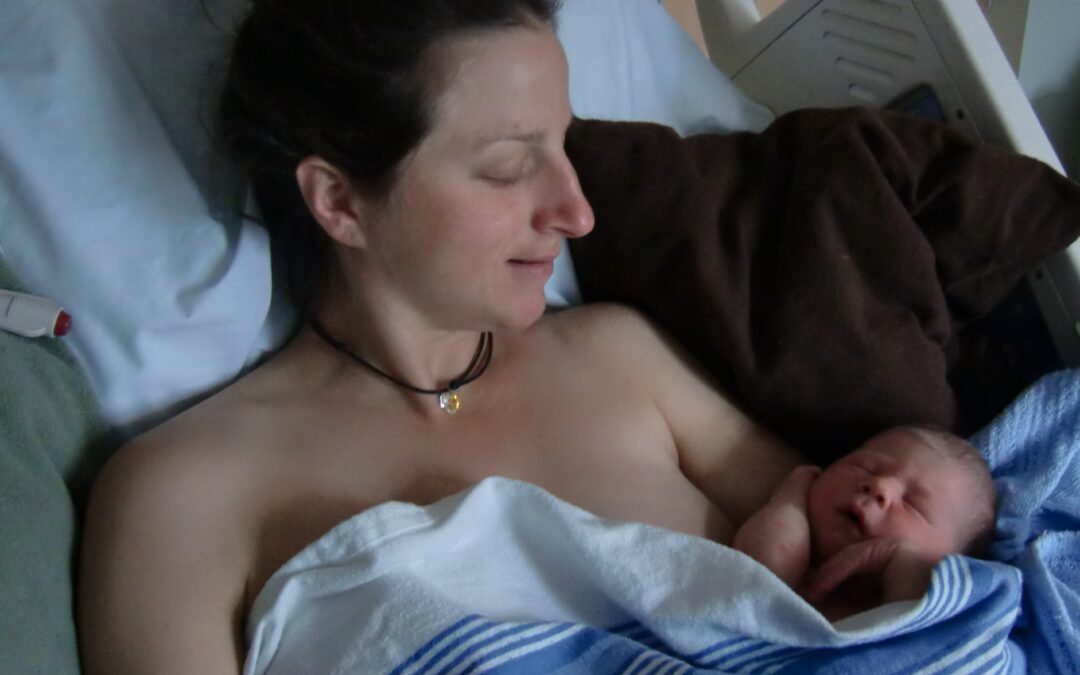
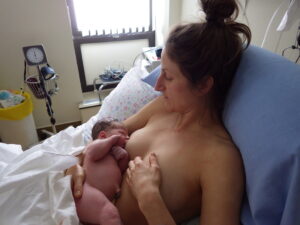
Veronique Rioux laying in bed while breastfeeding her newborn baby


A Course in Miracles: Reflections on Forgiveness, Perception and Inner Peace

A Course in Miracles: Reflections on Forgiveness, Perception and Inner Peace

a person with long hair holding their hands above their head and look like they are holding the sun in their handsMore than a decade ago, a friend recommended A Course in Miracles (ACIM) to me.

I tried several times to work through its daily lessons, but I struggled with the Christian terminology and never made it very far.

Years later, while completing my three-year Transpersonal Therapeutic Counselling program through Clearmind International, I encountered A Course in Miracles again. This time, I was encouraged to stay with it and look beyond some of the language that had initially created resistance for me.

That experience changed the way I understood many of its teachings.

What Is A Course in Miracles?

A Course in Miracles is a spiritual self-study program first published in 1976. Its teachings explore themes such as love, fear, forgiveness, judgment, perception and our relationships with one another.

Although it uses Christian language—including words such as God, Holy Spirit and Christ—I came to understand the material less as traditional religion and more as an invitation to examine the way I perceive myself, other people and the world around me.

One of the central ideas I took from the Course is that changing our experience doesn’t always begin by changing everything outside of us. Sometimes it begins by becoming curious about the lens through which we are seeing the situation.

Learning to See Things Differently

One of the things ACIM challenged me to examine was judgment.

I began noticing how easily I could move between feeling “less than” someone and feeling “better than” someone.

Although those positions appear opposite, I started to recognize that both created separation.

That realization became important for me personally and eventually influenced the way I think about relationships and counselling.

What happens when I stop trying to determine who is better, worse, right or wrong and become curious instead?

What am I protecting?

What am I afraid of?

What story am I telling myself?

And could there be another way of seeing this?

Forgiveness as an Inner Process

Another theme that stayed with me is forgiveness.

For me, forgiveness doesn’t mean pretending something painful didn’t happen, accepting harmful behaviour or abandoning healthy boundaries.

Instead, I’ve come to think about forgiveness as an internal process—an opportunity to notice what I continue to carry and decide what I want my relationship with that experience to be.

Sometimes we can’t change what happened.

We can, however, explore how much of our present life we want that experience to continue occupying.

“I Am Never Upset for the Reason I Think”

One lesson that has stayed with me is:

“I am never upset for the reason I think.”

I don’t interpret this as meaning that our reasons for being upset aren’t real or that painful circumstances should be dismissed.

Instead, I use it as an invitation to look underneath my immediate reaction.

If I’m angry, hurt, anxious or defensive, what else might be happening?

Is an old wound being touched?

Am I afraid of rejection?

Do I feel unseen?

Am I interpreting someone’s behaviour through something that happened long before this particular moment?

That kind of curiosity can take us somewhere very different from simply deciding who is right.

Some Lessons That Stayed With Me

There are many lessons throughout A Course in Miracles, but a few ideas have continued to resonate with me:

  • Being willing to see things differently
  • Choosing peace when possible
  • Examining fear rather than automatically following it
  • Letting go of grievances
  • Practising forgiveness
  • Remembering our shared humanity
  • Looking inward rather than expecting the outside world to resolve everything for us

I don’t always find these things easy to practise.

For me, that’s part of the point.

Personal growth isn’t about reaching a place where we’re never triggered, defensive, afraid or judgmental. It’s about becoming more aware when those reactions arise and having more choice about what we do with them.

How This Influences My Counselling Work

A Course in Miracles is not something a client needs to believe in or study to work with me.

Spirituality may be meaningful to some clients and completely irrelevant to others. I respect both.

What I’ve carried into my counselling work isn’t a particular spiritual doctrine. It’s curiosity about perception, compassion, forgiveness, relationships, judgment and the possibility that we can learn to relate differently to ourselves and others.

These ideas fit naturally with my training in transpersonal counselling and holistic therapy and with my belief that counselling should make room for the whole person.

Finding Your Own Path

One of the things I’ve learned through yoga, counselling, mindfulness, movement and spiritual exploration is that there isn’t one path that works for everyone.

A Course in Miracles became one influence in my own journey.

You may find meaning somewhere completely different.

What matters to me as a counsellor is creating space to explore your experiences, values, relationships and understanding of what gives your life meaning.

If you’re curious about my broader approach, you can learn more about my counselling services in Nanaimo and online.

And if you’d like to explore whether counselling together feels like the right fit, you can request a free 15-minute consultation.


Attachment Styles in Relationships: Understanding Anxious, Avoidant and Secure Patterns

Attachment Styles in Relationships: Understanding Anxious, Avoidant and Secure Patterns

Why do some of us become anxious when a partner pulls away, while others need distance when a relationship becomes emotionally intense?

Why can a small change in someone’s tone, affection or availability sometimes trigger such a strong reaction?

Attachment theory offers one way of understanding these patterns.

I first became particularly interested in adult attachment through the book Attached by Amir Levine and Rachel Heller. Learning about attachment gave me another lens for understanding why people can genuinely love one another and still become caught in painful cycles of pursuing, withdrawing, worrying and protecting themselves.

Understanding your attachment patterns isn’t about putting yourself—or your partner—into a box. It can help you become curious about what happens when you feel disconnected, threatened or uncertain in an important relationship.

What Is Attachment Theory?

Attachment theory began with research into the bonds children develop with their caregivers and has since influenced how psychologists understand emotional connection throughout life.

The American Psychological Association’s overview of attachment describes attachment as an emotional bond between people.

Our early relationships can influence expectations about closeness, safety and whether other people will be available when we need them.

But childhood isn’t the entire story.

Later relationships and experiences also matter, and attachment patterns can change.

The goal isn’t to decide:

“I’m anxious.”

or

“My partner is avoidant.”

A more useful question may be:

“What happens to me when connection doesn’t feel secure?”

Secure Attachment

People experiencing greater attachment security are generally more comfortable with both closeness and independence.

They tend to believe that important people will be available when needed and that relationship difficulties can be discussed without automatically threatening the entire relationship.

Greater security may look like:

  • Communicating needs relatively openly
  • Being able to give and receive affection
  • Maintaining independence without using distance to avoid intimacy
  • Tolerating disagreement without assuming the relationship is ending
  • Taking responsibility after hurting someone
  • Trusting that conflict can be repaired
  • Allowing a partner to have needs without automatically feeling overwhelmed by them

Secure doesn’t mean perfect.

Securely attached people still become jealous, angry, frightened and hurt. The difference is often their ability to return to connection and repair.

Anxious Attachment Patterns

Anxious attachment patterns can become activated when someone feels uncertain about whether an important person is emotionally available.

Someone may become particularly sensitive to changes in communication, affection or closeness.

When anxiety is activated, they might:

  • Seek frequent reassurance
  • Worry about rejection or abandonment
  • Become highly aware of changes in their partner’s mood
  • Interpret distance as evidence that something is wrong
  • Have difficulty concentrating on other things when the relationship feels uncertain
  • Reach repeatedly for connection during conflict
  • Feel an urgent need to resolve disagreements immediately

These reactions aren’t necessarily about being “too needy.”

Often, they are attempts to restore a sense of safety and connection.

Understanding what’s happening underneath the behaviour can create more possibilities than simply criticizing it.

Avoidant Attachment Patterns

Avoidant attachment patterns often involve protecting oneself by creating emotional distance when intimacy or dependence feels uncomfortable.

Someone experiencing this pattern may value independence strongly and have difficulty recognizing or expressing their need for connection.

When their attachment system becomes activated, they might:

  • Withdraw during emotionally intense conversations
  • Need considerable space after conflict
  • Have difficulty expressing vulnerable feelings
  • Minimize their own need for closeness
  • Feel overwhelmed by a partner’s requests for reassurance
  • Focus on a partner’s faults when intimacy increases
  • Become uncomfortable with emotional dependence

Again, this doesn’t mean someone doesn’t care.

Distance can sometimes be a protective strategy that developed because relying on others didn’t feel safe or effective.

The Anxious-Avoidant Cycle

One of the most painful relationship dynamics can occur when one partner seeks connection when distressed while the other seeks distance.

The more one person reaches, the more overwhelmed the other may feel.

The more the second person withdraws, the more frightened the first person becomes.

So they reach harder.

And the other retreats further.

Eventually, both partners may believe:

“See? This proves my fear was right.”

The anxious partner experiences the withdrawal they feared.

The avoidant partner experiences the emotional pressure they feared.

Neither person necessarily created the cycle intentionally.

This is why, in couples counselling, I often become interested not simply in who started the argument, but in the pattern that has developed between two people.

Attachment Isn’t About Blaming Your Parents

Understanding early attachment experiences can be helpful, but attachment theory doesn’t need to become another way of blaming our parents—or ourselves.

Parents have their own histories, resources, stresses and attachment experiences.

What matters therapeutically isn’t finding someone to blame.

It’s becoming curious about what we learned about closeness, conflict, safety, trust and vulnerability—and deciding whether those strategies are still serving us.

Your Attachment Style Isn’t a Life Sentence

Attachment patterns aren’t permanent identities.

People can experience different levels of security in different relationships and at different times in their lives.

A relationship that feels safe and responsive may bring out very different behaviours than one characterized by unpredictability or disconnection.

Through self-awareness, healthier relationships and counselling, people can develop greater earned security over time.

Instead of asking only:

“What is my attachment style?”

we can begin asking:

“What helps me feel safe enough to remain connected without abandoning myself?”

Building Greater Security in Relationships

Developing more secure ways of relating can involve learning to:

  1. Recognize when your attachment system has been activated.
  2. Name feelings rather than immediately acting them out.
  3. Communicate needs more directly.
  4. Listen to your partner without immediately becoming defensive.
  5. Respect the need for both connection and healthy autonomy.
  6. Take breaks during conflict without using distance as punishment.
  7. Return to difficult conversations and repair.
  8. Become curious about the fear underneath both partners’ reactions.

These skills overlap with many of the relationship tools I discuss in my article about Gottman-informed couples counselling.

Attachment and Person-Centred Counselling

Understanding attachment intellectually can be useful.

But change also happens through relationships.

Experiencing a relationship where you can gradually become vulnerable, express difficult emotions, establish boundaries and still feel respected can challenge some of the beliefs you’ve developed about relationships.

That’s one reason the therapeutic relationship itself matters to me.

You can read more about person-centred therapy, empathy and acceptance.

Attachment and Couples Counselling

Attachment theory can be especially helpful when couples have spent years arguing about the same things.

Instead of:

“You’re too needy.”

or:

“You don’t care about me.”

we can become curious about what each person’s behaviour is protecting.

Underneath anger might be fear.

Underneath pursuit might be a longing for reassurance.

Underneath withdrawal might be overwhelm or fear of failure.

Understanding those deeper emotions doesn’t automatically solve the conflict, but it can change the conversation.

If attachment patterns are contributing to conflict or disconnection in your relationship, you can learn more about my counselling services in Nanaimo and online.

If you’d like to explore whether counselling together might be a good fit, you can request a free 15-minute consultation.